Senator Hickenlooper Visits ESIIL to Learn About Innovative Environmental Data Science Research
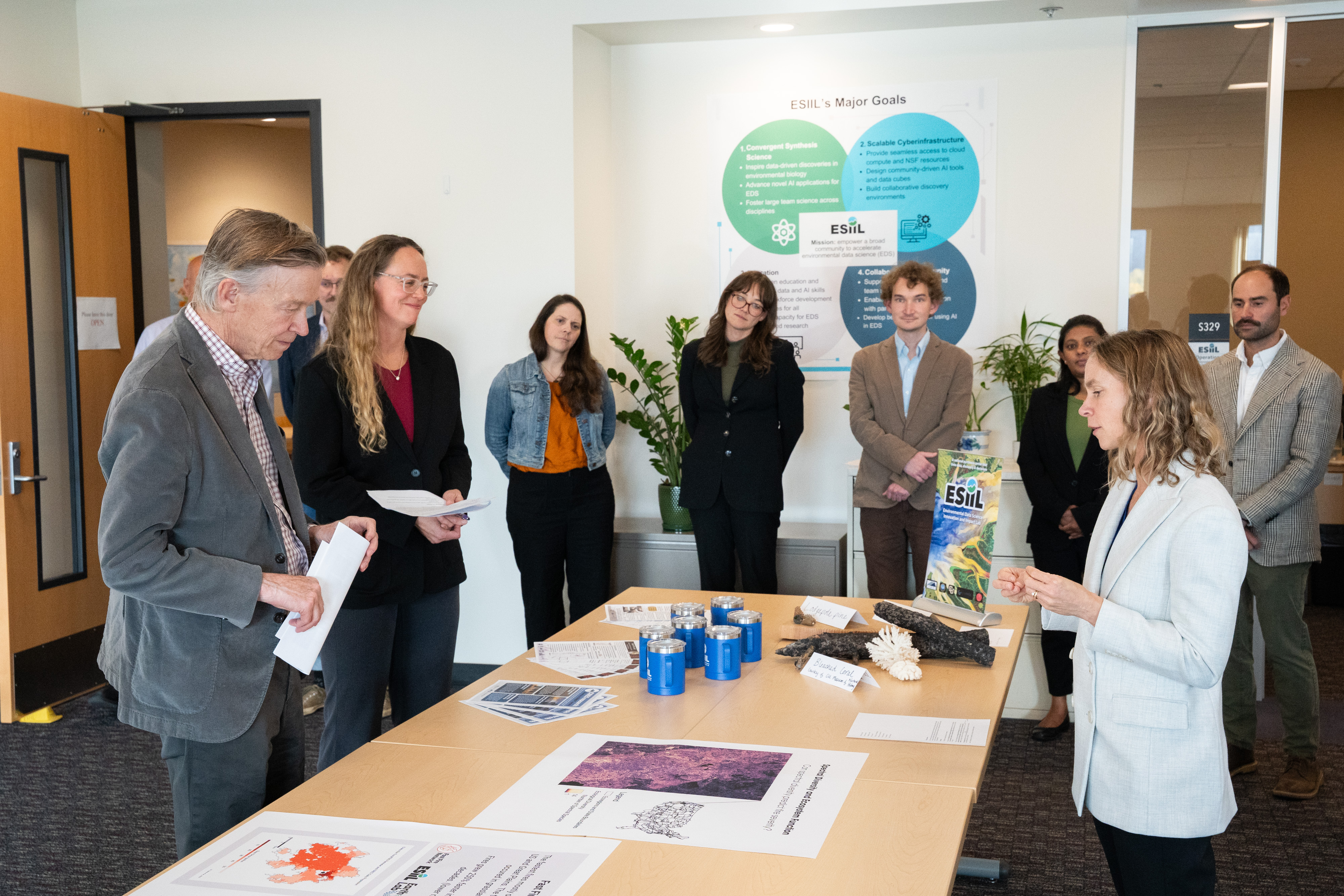
In October, the Environmental Data Science Innovation and Impact Lab (ESIIL), directed by Jennifer Balch, welcomed U.S. Senator John Hickenlooper to the University of Colorado Boulder to learn how cutting-edge environmental data science is helping address some of today's most pressing environmental challenges. Following opening remarks from Chancellor Justin Schwartz and Senior Vice Chancellor for Research and Innovation Massimo Ruzzene, Balch highlighted the breadth and impact of ESIIL's research and the critical role of National Science Foundation (NSF) investments in advancing scientific discovery. “ESIIL’s environmental data science fundamentally helps protect American lives, property, and our natural heritage,” Balch shared.
During the visit, ESIIL team members Chelsea Nagy, Kai Kopecky, and Virginia Iglesias showcased innovative approaches to leveraging environmental data to advance scientific discovery and develop real-world solutions. Nagy highlighted ESIIL's 23 working groups, which bring together researchers across disciplines to tackle complex environmental challenges, from using AI to better quantify global methane emissions to leveraging satellite imagery to understand biodiversity and ecosystem resilience. ESIIL postdoctoral associate Kai Kopecky shared his NSF-supported research exploring how dead trees and other foundational organisms influence ecosystem recovery following natural disasters, with important implications for managing Colorado's forests amid intensifying wildfires, drought, and insect outbreaks.
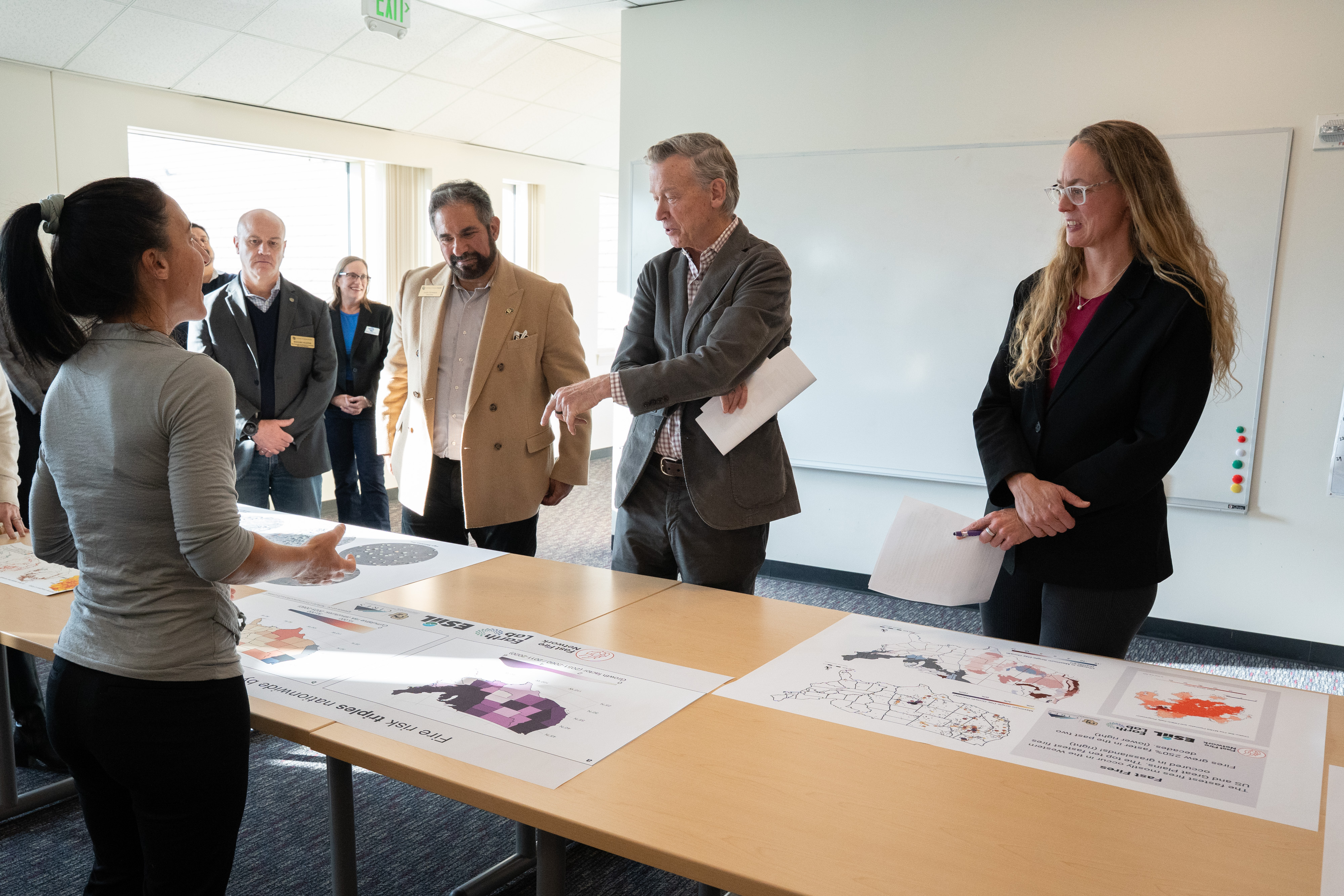
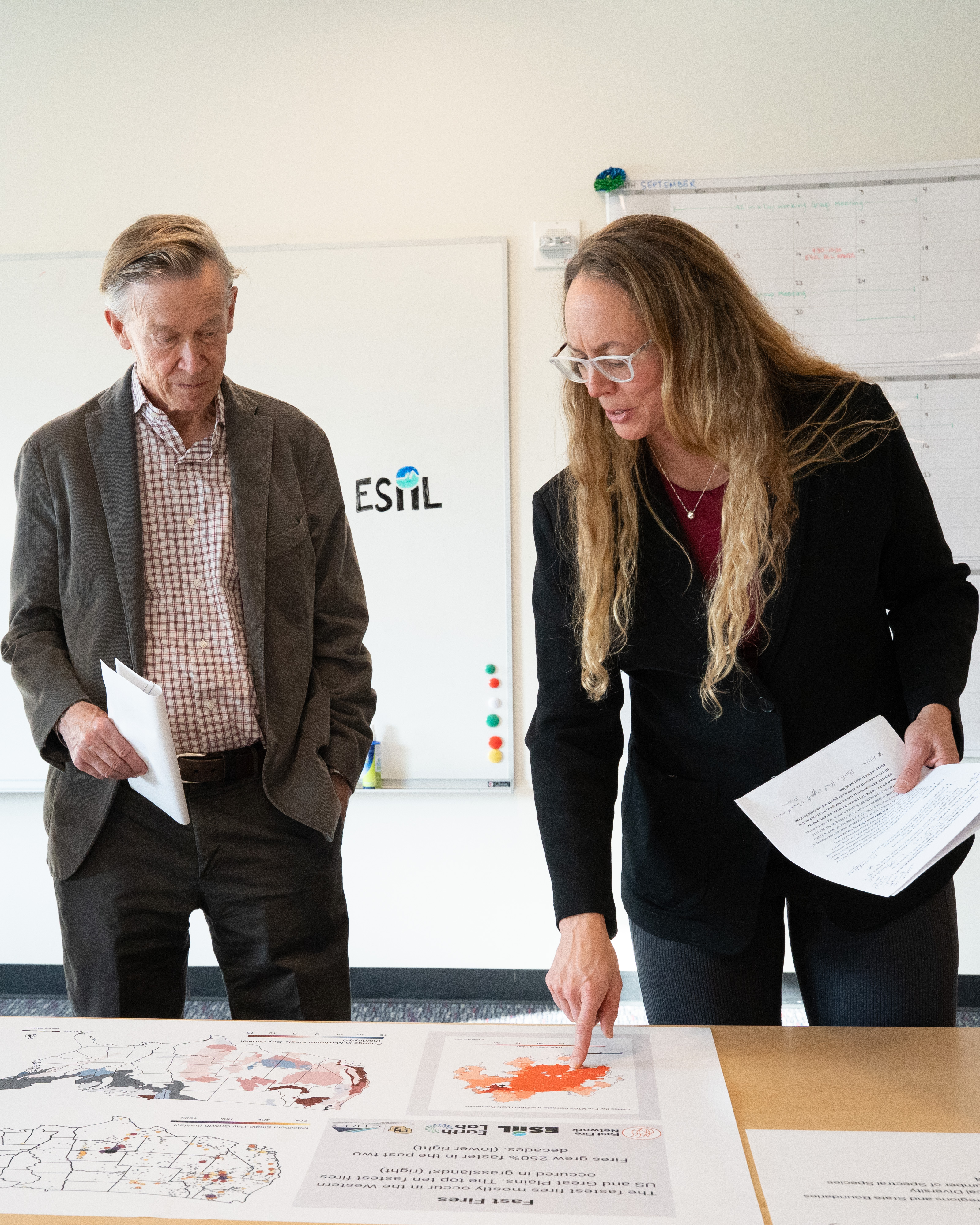
Virginia Iglesias, Earth Lab Director and ESIIL's Translation Lead, demonstrated how environmental data science can help communities anticipate and respond to growing wildfire threats. Her team's research projects that wildfire risk to homes could nearly triple nationally and increase fivefold in Colorado by midcentury without changes in how risk is managed. She emphasized the importance of developing solutions tailored to communities' unique environmental and socioeconomic needs, as well as the role of NSF funding in connecting scientific discoveries with actionable tools for decision-makers. The visit underscored how federal investments in research enable ESIIL to advance scientific understanding, foster interdisciplinary collaboration, and develop data-driven solutions that help protect communities and ecosystems.